Your Guide to Collecting 20th Century British Oil Paintings
If you're a lover of art and history, or perhaps someone just beginning to explore the world of fine art, collecting oil paintings is one of the most rewarding hobbies you can have. The 20th century was a time of great innovation and change in British art, producing iconic pieces that are still revered today. Whether you're looking to start your collection or add to it, understanding the key artists, trends, and what to look for can help guide you in making informed decisions.
In this guide, we’ll look into the world of 20th-century British oil paintings, providing you with insight into what makes them valuable, how to identify the right pieces, and how to build a collection that may grow in value but brings aesthetic pleasure to your space. (This is not financial investment advice and artist and painting values go up and down with the market)

Understanding the Appeal of 20th Century British Oil Paintings
The 20th century saw significant cultural and artistic shifts in Britain. From the traditional portraiture and landscapes of the early 1900s to the modernism and abstraction that emerged post-World War II, British artists were at the forefront of artistic experimentation. Oil paintings, because of their versatility and timeless appeal, played an essential role in capturing these changes.
Right: Charles Knight, Winter Beeches at Poynton
Why Oil Paintings?
Oil painting has been a primary medium for artists for centuries, and it remains one of the most popular forms of art to collect. The ability to layer paint, create depth, and capture fine detail is unparalleled in oil. For 20th-century British artists, the medium allowed for the exploration of both traditional and avant-garde techniques. Oil paints provide a richness and luminosity that watercolours or acrylics simply cannot replicate, making them highly sought after in the world of fine art collecting.
The Key Movements of 20th Century British Oil Painting
In the 20th century, British art saw several key movements that were crucial in shaping the landscape of oil painting during this period:
Post-Impressionism: Artists like Walter Sickert and Harold Gilman embraced post-impressionist techniques, which involved bolder brushstrokes and a focus on colour and light. Their oil paintings often depict urban scenes and domestic life, capturing the atmosphere of everyday existence.
Modernism: Following World War I, British artists began experimenting with abstraction, geometry, and new ways of seeing the world. Influenced by European avant-garde movements like Cubism and Surrealism, British artists such as Ben Nicholson and Barbara Hepworth brought a fresh approach to oil painting in the 1920s and 1930s.
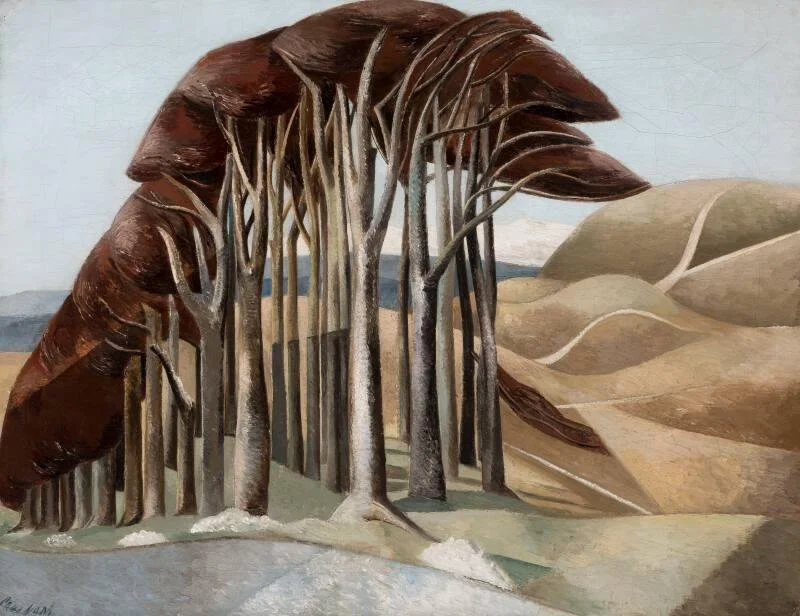
Left: Paul Nash, Wood on the Downs (Image credit: Aberdeen Archives, Gallery & Museums)
3. The War Artists: During both World Wars, Britain enlisted artists to capture the experiences of war. Artists like Paul Nash and Stanley Spencer produced striking oil paintings that remain powerful representations of conflict and the human condition.
4. Pop Art and Contemporary Movements: The 1960s saw the rise of Pop Art, with figures like Richard Hamilton and David Hockney incorporating mass media and consumer culture into their works. Their oil paintings often mixed traditional techniques with modern themes, giving rise to an exciting new genre of art.
The Origins and Craft of Oil Painting
Oil painting has a rich, centuries-old history, with its origins often traced to 15th-century Flemish artists like Jan van Eyck. However, evidence suggests oil-based pigments were used even earlier in Central Asia. What defines oil painting is the suspension of powdered pigments in a drying oil, typically linseed, walnut, or poppy seed. These natural oils provide a slow drying time, allowing artists to blend, layer, and develop depth with extraordinary subtlety.
Historically, artists used pigments made from minerals, plants, and even insects. Classic colours included ultramarine (from lapis lazuli), vermilion (from cinnabar), verdigris (copper acetate), and carmine (from cochineal beetles). Earth tones like yellow ochre, burnt sienna, and raw umber were also staples. These rich, enduring colours gave oil painting its distinct luminosity and texture, making it the preferred medium from the Renaissance to the present day.
How have brushes for oil paintings improved?
Over the last 100 years, significant improvements have been made to artists' brushes for oil painting. Traditionally, brushes were handmade using natural bristles, such as hog hair, which are still valued for their stiffness and paint-holding ability. However, modern brush technology has introduced high-quality synthetic fibres that mimic natural hair while offering greater durability, consistency, and resistance to solvents. Innovations in handle ergonomics and balance have also enhanced comfort and control. Ferrules (the metal band holding the bristles) are now often made with corrosion-resistant materials for longevity. Additionally, a wider variety of shapes and sizes are available, catering to specific techniques, from precise detail work to expressive impasto. These developments have given oil painters more reliable, versatile tools suited to both traditional and contemporary styles.
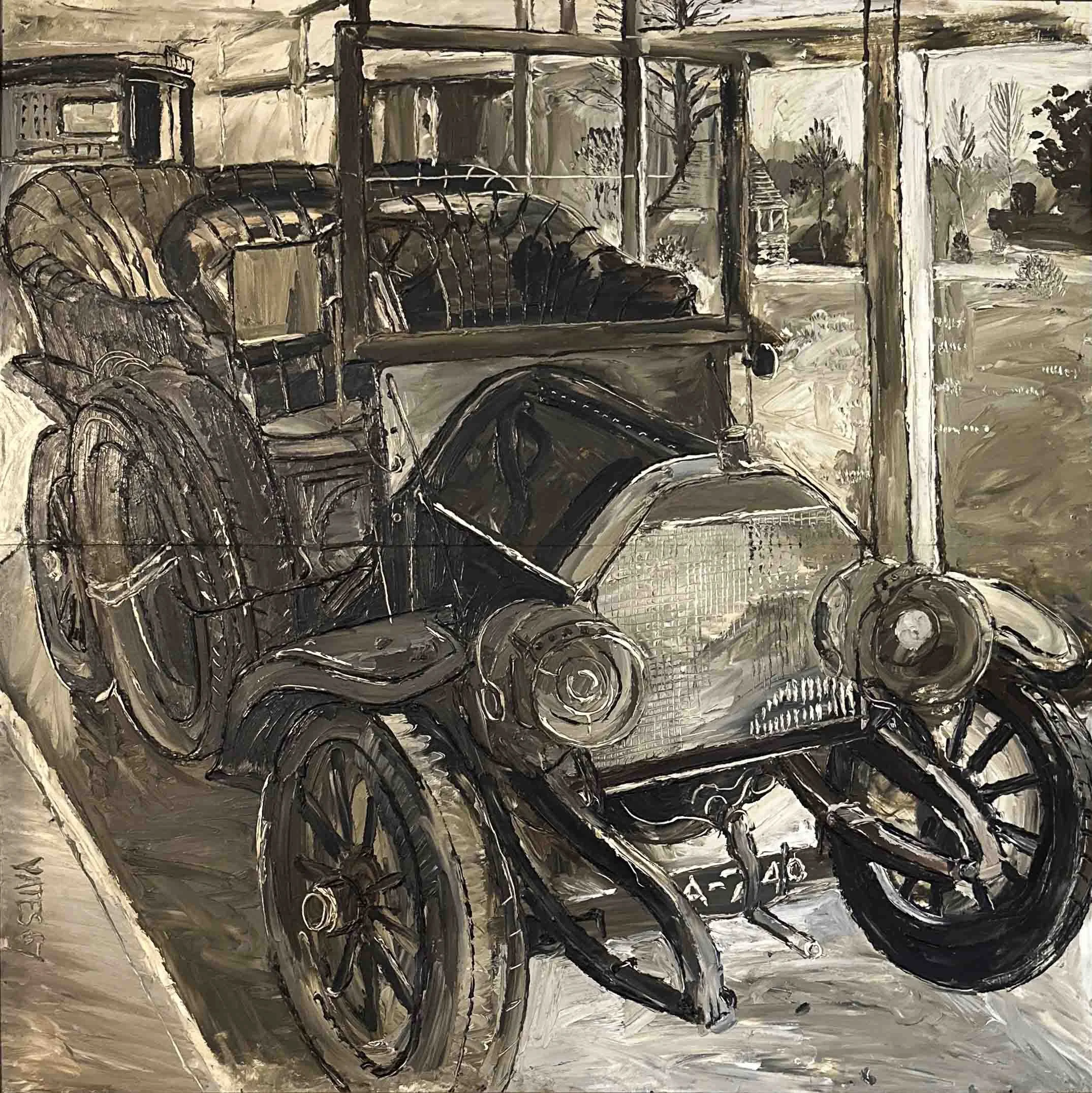
Right: Fred Yates’, Mercedes 1968
And now to the canvas
Oil painters work on a variety of surfaces, each chosen for its texture, absorbency, and durability. The most common support is canvas, usually made from cotton or linen, stretched over a wooden frame and primed with gesso to prevent oil absorption. Linen is preferred by professionals for its fine texture and strength. Canvas boards, canvas mounted on rigid cardboard, offer an affordable, portable option. Wood panels (such as birch or MDF) provide a smooth, solid surface, ideal for detailed work. Some artists also paint on prepared paper or metal (often copper), though less commonly. All surfaces must be properly sealed and primed to protect them from the oil’s acidity.
Sometimes, the artist will use whatever is available, and this can create stunning, and incredibly unique artworks, such as Joash Woodrow’s, Portrait of a Man (Saul), which was painted on a sackcloth, or Fred Yates’ use of brie boxes, wooden doors, or as shown in the image on the right, old boards tacked together to create stunning and original painting of their time.
How to Start Collecting 20th Century British Oil Paintings
1. Know Your Artists
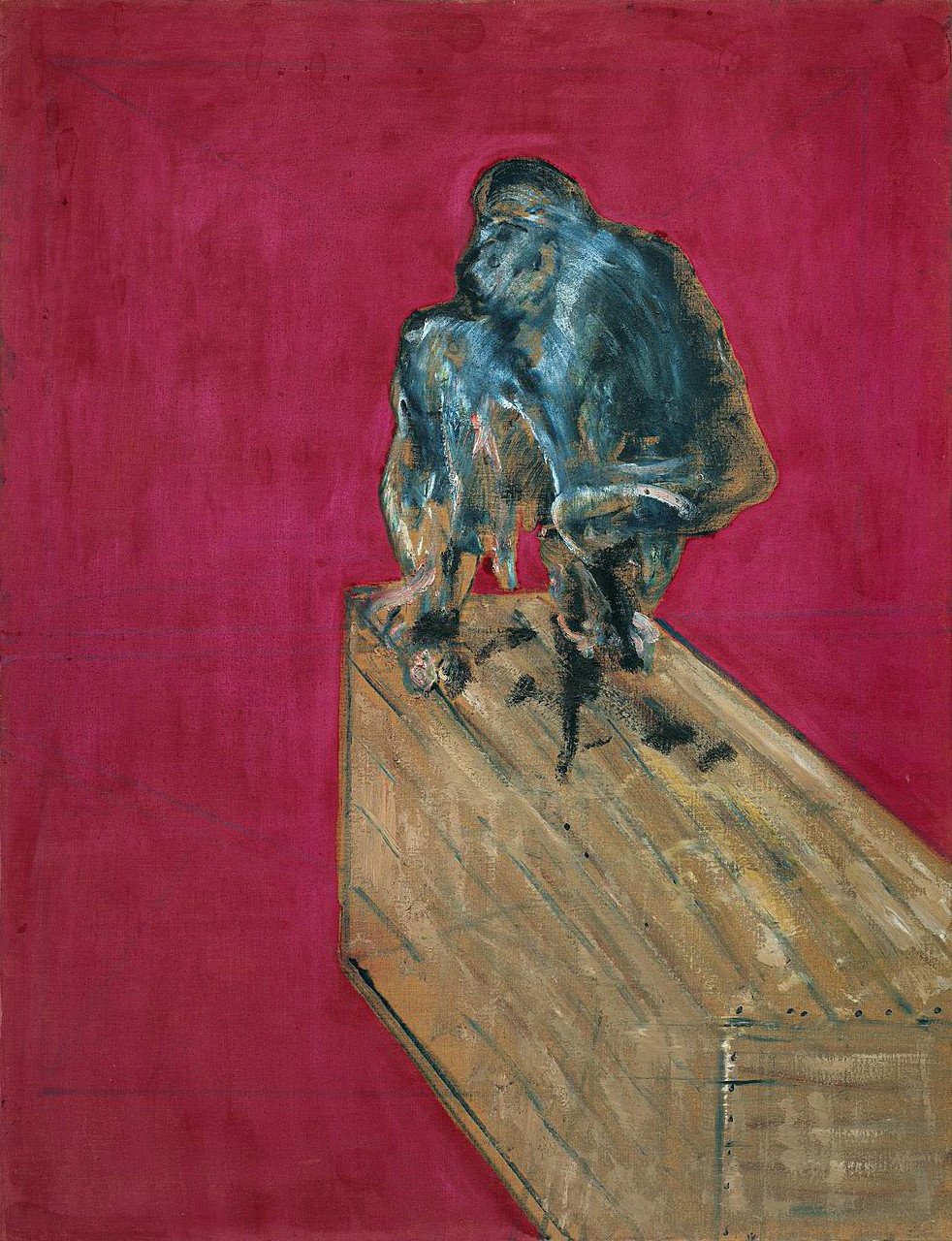
Left: Francis Bacon, Study for Chimpanzee (Credit: The Solomon R. Guggenheim Foundation Peggy Guggenheim Collection, Venice, 1976)
Before diving into the market, familiarise yourself with some of the key British artists of the 20th century. These artists helped shape the landscape of British oil painting and set the stage for future artistic innovation. Some notable artists to look out for include:
David Hockney: Known for his bold use of colour and innovative landscapes, Hockney’s oil paintings are some of the most collectible of the 20th century.
Lucian Freud: One of Britain’s most celebrated figurative artists, Freud’s intense portraits in oil paint are highly sought after by collectors.
Francis Bacon: Renowned for his raw, emotional oil paintings, Bacon’s works are considered some of the most significant in modern art.
Stanley Spencer: Famous for his religious and war-themed works, Spencer’s oil paintings have a deeply personal and evocative quality.
Whilst these are more expensive artists, they are some of our outstanding British painters. If your budget does not stretch into the hundreds of thousands of pounds you can always look up the following British Oil Painters as an alternative stating point.
Fred Appleyard (1874–1963) British landscape and figurative oil painter, noted for sunny outdoor scenes using dappling techniques. Exhibited widely at Royal Academy, often available in regional gallery retrospectives.
Frederick (“Fred”) Hall (1860–1948) Cornwall-based Newlyn School artist, transitioned into Impressionist landscapes and rural scenes. Often found via regional dealers at modest prices.
Claude Henry Buckle (1905–1973) Known for railway posters and marine scenes in mid-century oils, Buckle’s works occasionally appear at affordable levels.
Gwilym Prichard (1931-2015) Welsh artist with a passion for strong landscapes in either bright oils or more earthy Welsh autumnal tones
Joseph Edward Southall (1861–1944) Arts and Crafts figure and muralist, known for tempera but also painted in oils. His decorative style offers accessible historical appeal.
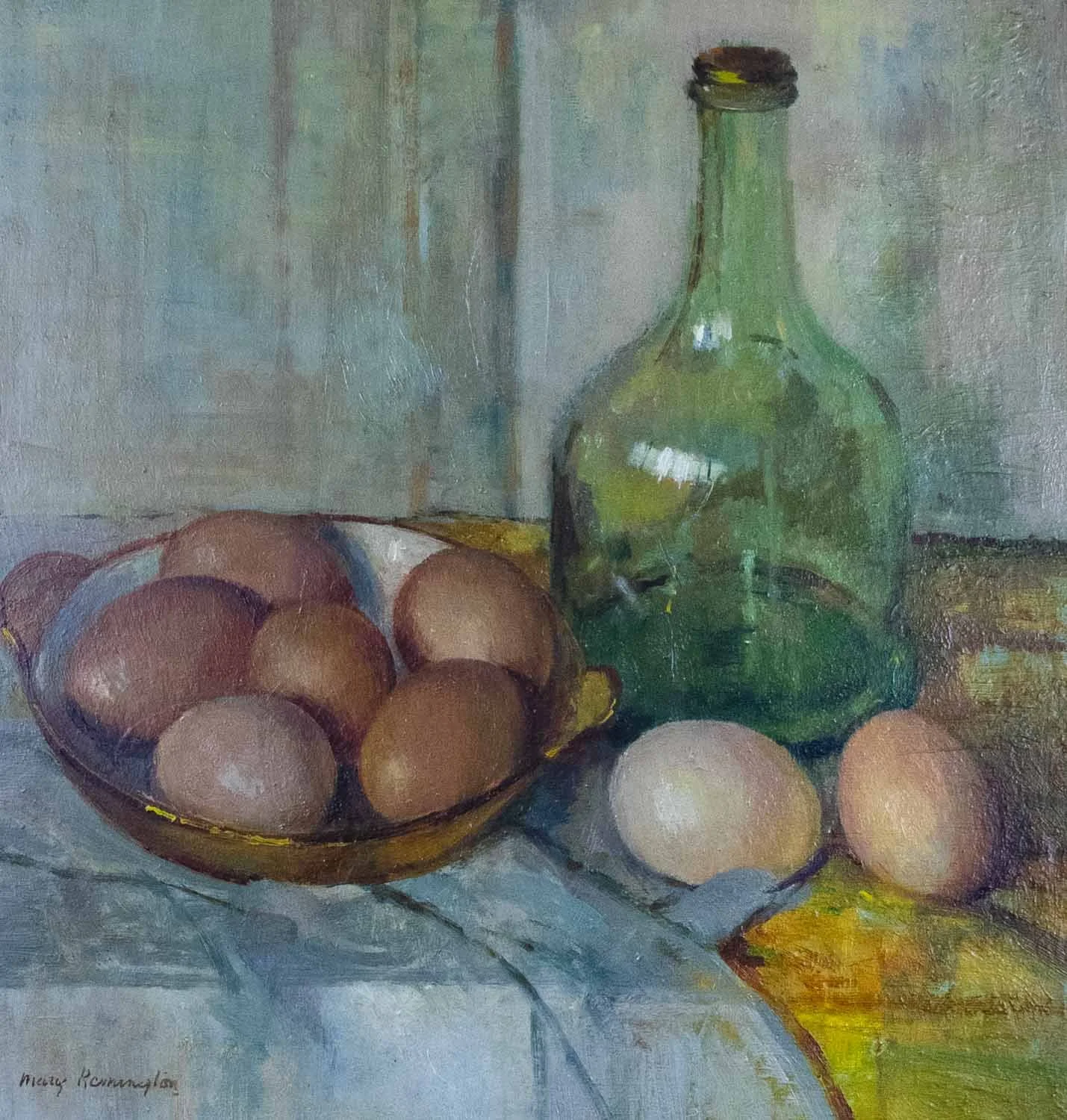
Right: Mary Remington, Eggs in a Basket
John Alfred Haggis (1897–1968) Painted landscapes and portraits in both oil and watercolour. Work surfaces in secondary markets at reasonable rates.
William Hoggatt (1871–1961 - Isle of Man painter) Though regional, his forest and rural oil landscapes are market-available, often under at affordable prices
Kitty Church (1910 – 1999) Whilst best known for her watercolour landscapes she also painted wonderful oil portraits and still life works
Mary Remington (1910 – 2003) Gorgeous oil interiors, floral and kitchen utensil paintings from this NEAC painter
2. Understand the Condition of the Painting
When collecting oil paintings, the condition of the work is paramount. Over time, oil paints can crack, fade, or lose their vibrancy. Here are some tips for evaluating the condition:
Canvas Condition: Check for any signs of warping or tears. You should also look at the back of the painting to assess if any repairs have been made.
Paint Quality: Examine the surface of the painting closely for any cracks (called "craquelure") or discolouration.
Frame: While the frame doesn’t affect the painting itself, a well-preserved frame can enhance the overall value of the artwork.
If you’re not experienced in evaluating paintings, consider hiring a professional conservator to assess the painting’s condition.
3. Rarity and Provenance
The rarity of a work and its provenance (history of ownership) can significantly impact its value. Works with a strong provenance, such as having been owned by a famous collector or exhibited in a prestigious gallery, will usually be more valuable. It’s a good idea to research the provenance of the painting you’re interested in before making an offer.
4. Buy from Reputable Dealers
When starting your collection, it’s wise to buy from reputable galleries, auction houses, or dealers. Well-known establishments often offer certificates of authenticity and can provide you with the history of the painting. Popular auction houses like Christie's or Sotheby’s specialise in 20th-century British oil paintings and can offer you the best selection at the top end, but bargains do exist with the regional dealers and for those buyers who are prepared to methodically search online.
5. Start with Smaller, Affordable Works
If you’re new to collecting, start by purchasing smaller works or prints of 20th-century British oil paintings by lesser-known artists. These can be a good entry point into the art world and allow you to learn more about the different styles and techniques before making a larger investment.
What Makes 20th Century British Oil Paintings Valuable?
Several factors can affect the value of a 20th-century British oil painting:
Artist’s Reputation: Works by famous British artists such as David Hockney, Lucian Freud, and Francis Bacon tend to be highly valued. Areas of interest such as female artists or genre lead areas are also sort after.
Historical Significance: Oil paintings that capture key moments in British history or reflect important cultural shifts can be more valuable.
Size: Larger paintings, especially those with significant artistic merit, can command higher prices. However, there are more buyers for small paintings that fit domestic settings easily.
Condition: As mentioned earlier, the condition of the painting is critical to its value.
Final Thoughts from Me

Left: Fred Yates, Begonias and Artichokes
Collecting 20th Century British oil paintings can be an incredibly rewarding pursuit, both personally and financially over the longer term. For me it has been a personal journey as an art collector over the years, and more recently, being privileged to work with art dealers and art collectors through Rastall Art.
The best advice I can offer is that by understanding the key movements, familiarising yourself with artists and style that appeal to you, and buying with knowledge and care, you can build a collection that you’ll enjoy for years to come.
I find art in its many forms fascinating and would always counsel that collecting art is not just about acquiring valuable pieces, it's about finding works that resonate with you personally. Whether you’re drawn to the raw emotion of Francis Bacon’s paintings or the vibrant landscapes of David Hockney or even (more likely) a small named artist in your area, there’s a whole universe of art waiting to be discovered. Happy collecting!
Simon
You can also find a selection of British Oil Paintings here at www.rastall.art